
Last updated November 18, 2026







Free written scope consultation - allowances, timeline, and change-order rules on paper before a single trade is scheduled
Kitchen Remodeling Warning Signs Every Homeowner Should Know
Nevada’s Contractors Board logged more than 1,200 complaints against contractors in a recent year, and the most common thread wasn’t crooked tile or the wrong paint color. It was agreements that didn’t exist when the dispute started. No written scope. No change order. No clear price. The homeowner was left holding a memory of a conversation while the contractor held the money. We’ve walked into kitchens across Paradise where the warning signs were visible months before the first cabinet came down, and nobody knew what to look for. This guide separates the two kinds of red flags homeowners constantly mix up: the physical clues hiding in your existing kitchen, and the contractor and contract problems that cost far more. By the end you’ll know what to inspect, what to ask, and what should make you walk away.
Quick Answer
The biggest kitchen remodeling warning signs are a contractor who won’t put a written scope and fixed price in writing, a contract with vague “allowances” or open-ended language for “unforeseen conditions,” and a crew that requests more money mid-project without a signed change order. Physical warning signs in the kitchen itself – water staining under the sink, grease residue behind the range, out-of-level floors – are real too, but they’re fixable. A dishonest contractor is the problem that follows you home.
Styles & brands we work with
- Kitchen remodeling
- Bathroom remodeling
- Home additions & ADU
- Roofing
- Windows & doors
- Driveway & pavers
- Fence
Table of Contents
- Physical Warning Signs Hiding in Your Existing Kitchen
- Contractor Red Flags Before You Sign Anything
- The Contract Language That Protects You (and What Doesn’t)
- How to Verify a Nevada Contractor License
- Why Allowances and “Unforeseen Conditions” Cost You Money
- Mid-Project Warning Signs: When the Job Starts Sliding
- What a Real 365-Day Guarantee Covers
- Paradise-Specific Issues That Trip Up Remodels
Physical Warning Signs Hiding in Your Existing Kitchen
Before anyone swings a hammer, a good contractor inspects what’s already there. Those findings shape the scope, the schedule and the price. When a contractor skips this step and quotes a number from the driveway, that’s the first warning sign. Here’s what we look for in a Paradise kitchen before we write a scope, and what you can check yourself.
- Water staining under the sink and around the dishwasher. Dark rings on the cabinet base or soft, spongy particleboard mean the subfloor or cabinet box has been wet at some point. That moisture can telegraph into new cabinet installation if it isn’t addressed first.
- Grease residue or scorching behind the range and hood. A past grease fire leaves a distinct pattern – browned drywall, discolored paint above the hood line, or a slightly wavy finish. In Paradise, where the summer heat pushes kitchen exhaust systems hard, we regularly find hoods venting into the cabinet cavity instead of outdoors, which accelerates grease buildup over years.
- Out-of-level floors. A floor that slopes more than a quarter inch over ten feet will make cabinets sit skewed and countertops separate at the seams. Slab-on-grade homes throughout Paradise can develop subtle settlement, and it has to be corrected before the new work goes in.
- Flickering outlets or a two-prong receptacle near the counter. Older kitchens often don’t meet current code for countertop circuits. Reworking them is part of the remodel, not an add-on surprise.
- Plumbing supply lines with corrosion at the shutoff. Small leak points that don’t matter to a faucet become serious when the cabinet is sealed around them.
- Drywall cracks above the doorway header. Usually cosmetic, but occasionally a sign of movement that should be understood before new cabinetry adds weight.
None of these are reasons to cancel a remodel. They’re reasons to get them into the written scope before you sign. A contractor who won’t look under the sink or behind the range before pricing the job is handing you a number that will change. When we prepare a scope, we walk the kitchen with you and note every finding in writing – that’s the whole point of our Kitchen Remodeling in Paradise process, and it’s the same for Bathroom Remodeling in Paradise and full-home projects.
Contractor Red Flags Before You Sign Anything
We’ve watched homeowners in Paradise lose thousands not to a bad tile job but to a contractor who controlled every piece of information in the relationship. These are the tells that show up before money ever changes hands.
- They won’t put a written price on paper. A verbal ballpark or a number scribbled on a business card is not a quote. A written price you can hold them to, before work starts, is the baseline. When the number lives only in conversation, it changes at the door.
- They want a large cash deposit upfront. A reasonable deposit secures materials and a schedule. A demand for half the job in cash before any work begins is a warning sign, especially with no written contract behind it.
- They can’t or won’t give a physical address or a license number. Ask for it. Then verify it. We cover that below.
- They push you off the phone. A contractor who answers only by text or sends every call to voicemail is telling you how they’ll handle a warranty claim. A live person should answer, and we take that seriously – our phone line is covered around the clock.
- They badmouth every competitor and promise the fastest timeline. Nobody installs a kitchen in three days. Timeline promises that beat everyone else are usually covering for something else.
- They pressure you to decide now. No reputable contractor needs a same-day signature. Anyone who says the price expires tonight is using urgency to skip your questions.
- They arrive without a contract at the estimate. Even the proposal should be written and specific. If the first document you see is the one you’re asked to sign at demo, keep asking questions.
The pattern behind nearly every complaint we’ve seen boils down to one thing: the contractor knew more than the homeowner and used that gap. You close the gap by demanding everything in writing before the first nail is pulled.
The Contract Language That Protects You (and What Doesn’t)
Here’s where most homeowners realize too late what they signed. A legitimate contract for a kitchen remodel in Paradise should read like a list of decisions you made, not a vague summary of a job someone will do.
A real scope of work names the make and model of the cabinets, the countertop material and edge, the fixture brands, the flooring, the electrical work being added, who pulls the permits, and what happens to the old material. When you see brands listed on the contract – KraftMaid or Wellborn cabinetry, Cambria quartz or Silestone counters, a Kohler or Moen faucet – you know exactly what’s coming to your house. When you see “new cabinets, new counter, new floor,” you’ve signed a one-line description, and that line is the opening for every disagreement later.
- Specify the material. “Quartz countertops” could mean a dozen products at wildly different prices. “Cambria quartz, 3cm, with a 4-inch backsplash” is a decision.
- Name who pulls the permits. In Paradise, Clark County and the Southern Nevada Health District have their own rules depending on scope. The contract should say who’s responsible.
- Write the schedule with a start date and a duration. Not a vague “early summer.” A real start window and a real number of working days.
- State the payment schedule against milestones. Payments should follow completion, not precede it.
- Define the change-order process. A change order is a written document both sides sign before extra work gets done. Without one, “we had to add a valve” becomes an invoice.
- Name the warranty term and what it covers. “Satisfaction guaranteed” is not a warranty. “365 days, in writing, on workmanship” is.
How to Verify a Nevada Contractor License
Nevada requires general contractors and specialty contractors to hold an active license from the Nevada State Contractors Board. Verification takes about five minutes and it’s the single highest-value check you can make before signing.
- Ask the contractor for their license number, in writing, on the proposal.
- Look up the number on the Nevada State Contractors Board’s public license search.
- Confirm the license is active, in the right classification for kitchen or residential remodeling, and that the name matches the contract.
- Check for any disciplinary actions or complaints on record.
- Confirm the required bond and general liability insurance are current.
- Ask for a certificate of insurance that names you and shows the policy is active.
Now the part most homeowners don’t think through: what “bonded and insured” actually means. The bond isn’t insurance for you directly – it’s a claim fund that protects the homeowner if the contractor fails to perform or violates licensing law. General liability insurance covers property damage or injury caused by the contractor’s work. Workers’ compensation covers the contractor’s employees if they’re hurt on the job.
Here’s the scenario that should get your attention. If an uninsured subcontractor is injured in your kitchen and the contractor doesn’t carry workers’ comp for them, the claim can land on your homeowner’s policy. That’s why the certificate matters: it’s proof that the people working in your home are covered before they walk in. Our own vetted local pro network requires licensing and insurance as each state requires, and we walk through the certificate with you. It’s not paperwork for its own sake; it’s the difference between a remodel and a liability.
Why Allowances and “Unforeseen Conditions” Cost You Money
An allowance is a placeholder price in a contract for a material the homeowner hasn’t selected yet – say, “$2,000 allowance for backsplash tile.” Sounds fair. Here’s the trap: the contractor prices the job with a low allowance, wins the bid, and then the homeowner discovers that any tile they actually want exceeds the allowance. The difference is billed as an overage. The so-called “low bid” wasn’t low; it was a budget for materials you weren’t going to pick.
Allowances aren’t automatically a red flag. A great contractor uses them transparently, with a real dollar amount tied to real product options you can see before signing. What you want is either a fixed selection or an allowance priced against specific brands – “Techo-Bloc or Belgard pavers for the patio extension, selection to be made with the contractor from the listed lines” – so the number isn’t a surprise later.
The other phrase to watch is “unforeseen conditions.” Water damage, rot, or framing problems do happen, and no honest contractor can promise they won’t. But that clause should never mean the price silently shifts. Legitimate unforeseen work triggers a written change order with a fixed price, signed by you before it’s performed. If your contract says the price “may be adjusted” for unforeseen conditions and doesn’t require your written consent, the clause is a hole in the price.
Mid-Project Warning Signs: When the Job Starts Sliding
The red flags that matter most show up after the demolition dust settles. You’ve already paid a deposit, cabinets are ordered, and now the pressure starts. These are the mid-project signs to watch for.
- The crew disappears for days without notice or explanation. Every project has pauses – waiting on cabinets, inspections, material deliveries. But a contractor who vanishes without a call, a text, or a revised schedule is hiding something. A real arrival window means a real explanation when it slips.
- The materials delivered don’t match the spec. Check the boxes and the labels. If the contract named Cambria and a different brand arrives, that’s not a substitution you should absorb.
- A verbal request for additional money. “We found rot, drop off another check.” That’s not how it works. It should be a written change order with a fixed price and your signature before the extra work is performed.
- The job site is left a mess every night. The Kingswell Way is blunt about this for a reason: “Say the price before the work. Show up in the window we gave. Leave the place cleaner than we found it.” A crew that never cleans up is a crew that skips other things too.
- Subcontractors show up without paperwork or a company identity. You should know who’s in your home and under what coverage.
- The permit inspection isn’t called. In Paradise, a kitchen remodel that adds electrical, plumbing or structural work usually needs a permit and an inspection. Skipping the inspection hides problems and can complicate resale or insurance later.
- The finish work starts before the substrate is ready. If tile is going on before the cement board substrate (the moisture-resistant layer behind the tile) is properly installed and waterproofed, you’re looking at a future crack pattern.
When something feels off mid-project, write it down, ask for it in writing, and don’t hand over another payment until the process is documented. That’s the discipline that protects you and it’s the standard we hold ourselves to under our General Contractor in Paradise services.
What a Real 365-Day Guarantee Covers
A 365-day written guarantee covers the workmanship for a full year after the project is completed. That means if a joint fails, a cabinet door warps, a tile lifts, a seam separates, or plumbing you had installed starts leaking, the contractor returns and fixes it at no charge. It doesn’t cover damage from misuse or acts of nature, and it doesn’t replace the manufacturers’ warranties on the products themselves. It sits alongside them.
A vague “satisfaction guaranteed” is legally meaningless. It doesn’t state a duration, doesn’t define what triggers a return visit, and doesn’t say who pays. When a homeowner asks us what will happen if something fails, we can answer with the specific document: the 365-Day Done Right Promise, in writing on every project, plus a free return visit if a repair fails, no service call or re-inspection fee.
And the products layer onto that guarantee. When you install Cambria quartz, for example, it carries a manufacturer’s lifetime warranty that runs alongside the contractor’s workmanship warranty. The two together are what actually protects your investment. When you’re vetting any contractor in Paradise, ask for the warranty in writing before you sign. If they can’t produce one, that’s the answer.
Paradise-Specific Issues That Trip Up Remodels
Kitchens in Paradise come with a few local wrinkles worth knowing before you sign anything. Clark County’s permitting and inspection schedule applies to most kitchen remodels that touch electrical, plumbing or structure, and a contractor who says “we don’t need a permit for that” is telling you to skip an inspection that protects you.
Our desert climate matters inside the kitchen, too. Air conditioning that runs hard from May through September dries out cabinet wood and flooring, and the indoor-outdoor humidity swing during monsoon season can make wood flooring buckle if the installers don’t leave the correct expansion gap. Faucets and filters here deal with some of the hardest water in the country – hard water scale builds up faster and eats through cheap fixtures, which is one solid reason not to skimp on a Kohler or Moen mixing valve. An unvented range hood is another local issue; without a real duct to the outside, cooking grease collects on the ceiling and cabinet tops year after year.
If your project touches the exterior, our team works with Belgard and Unilock pavers for outdoor kitchens and patio extensions. Countertops sourced through Cambria, Silestone or Caesarstone carry their own warranties that we walk through with every homeowner. Neighborhoods throughout Paradise – the established homes near the Boulevard, the newer builds further out – each present their own quirks, and a contractor who has actually worked in them knows what to look for.
Common Mistakes to Avoid
- Hiring off the lowest bid alone. The lowest number is often the one built on allowances that will balloon later. Compare scope, not just price.
- Signing a one-line scope. “Kitchen remodel – $34,000” is not a contract. Demand the specifics in writing.
- Skipping the license check. Five minutes on the Nevada State Contractors Board site can save you thousands.
- Paying too much upfront in cash. Deposits should secure materials, not fund the contractor’s other jobs.
- Accepting verbal change orders. Anything added mid-project needs a written, signed change order with a fixed price, or it’s an invitation for an invoice.
- Assuming “satisfaction guaranteed” means something. It doesn’t. Get the term, the coverage and the return-visit policy in writing.
- Ignoring the substrate and waterproofing. If a contractor skips the cement board behind tile or paints over water staining instead of fixing it, the finish will fail early – and you’ll be the one paying for the redo.
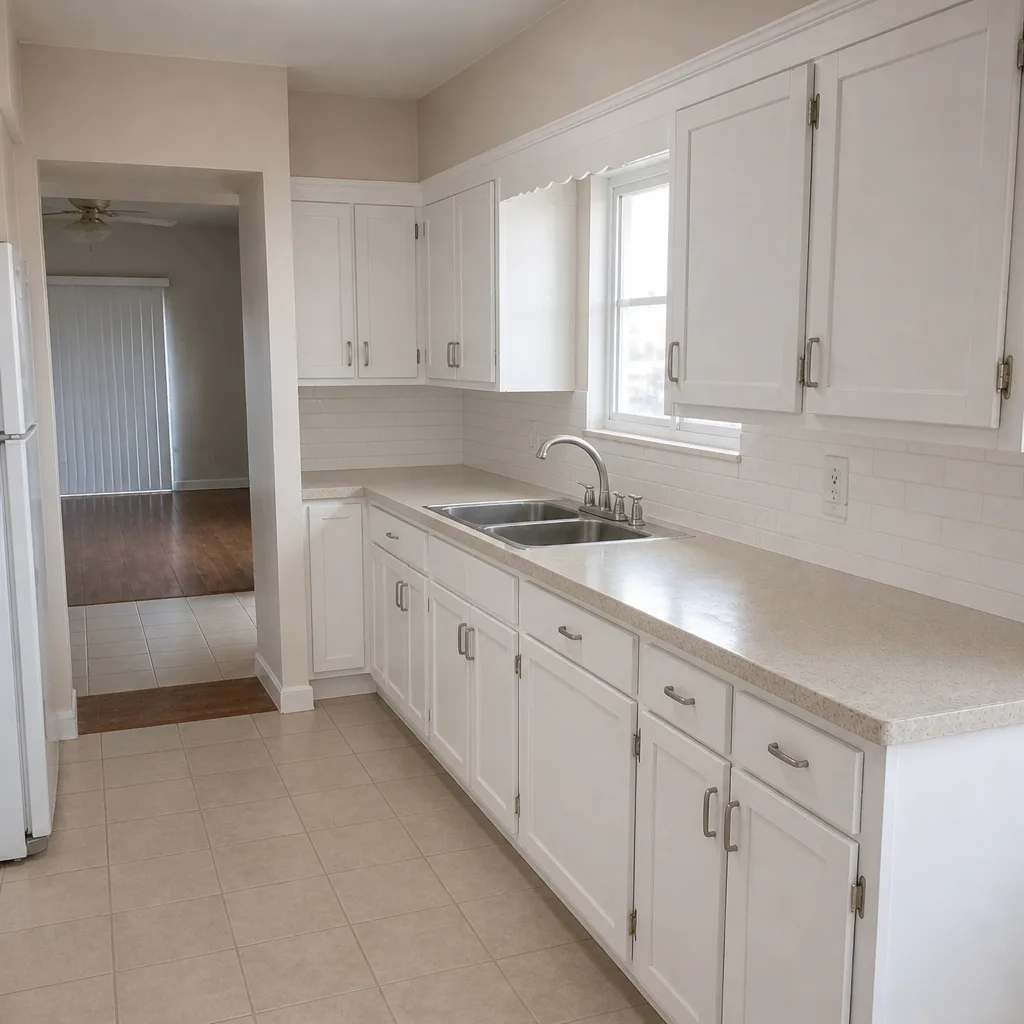
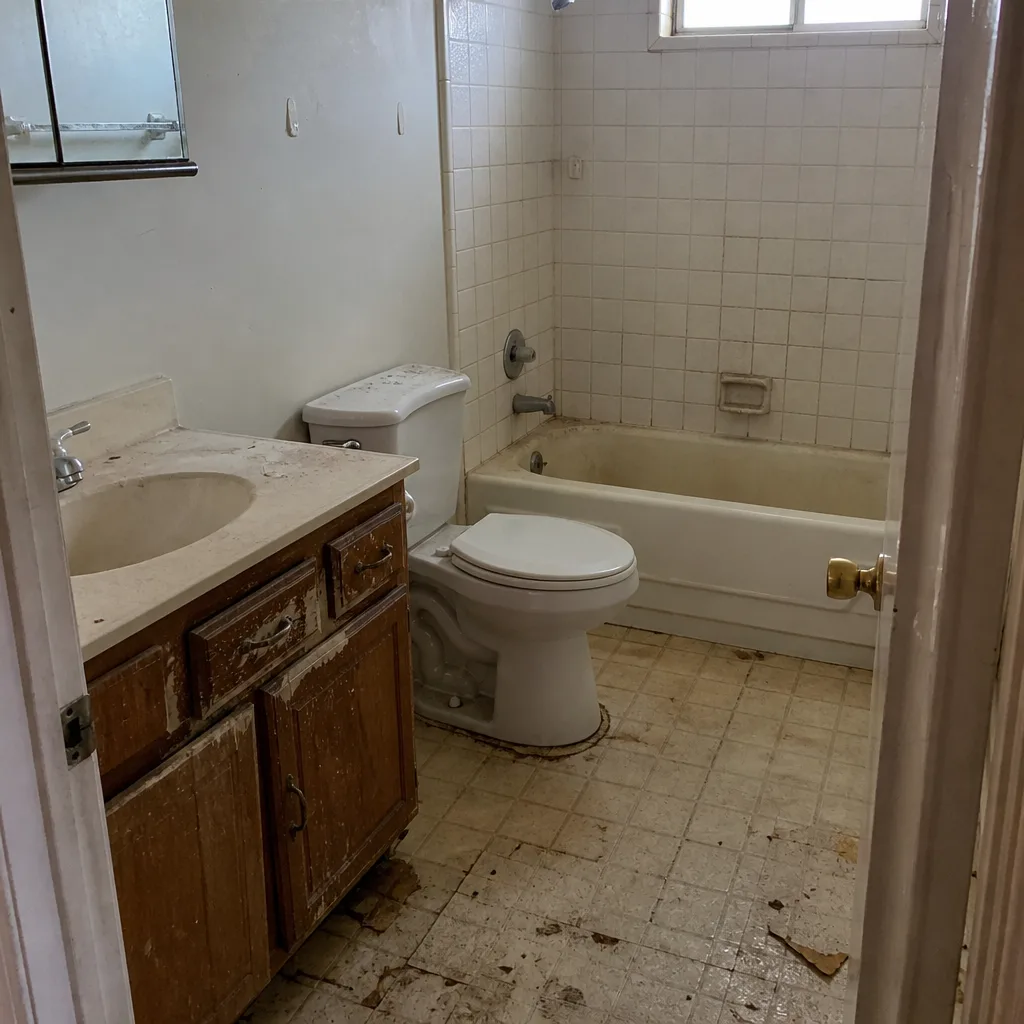
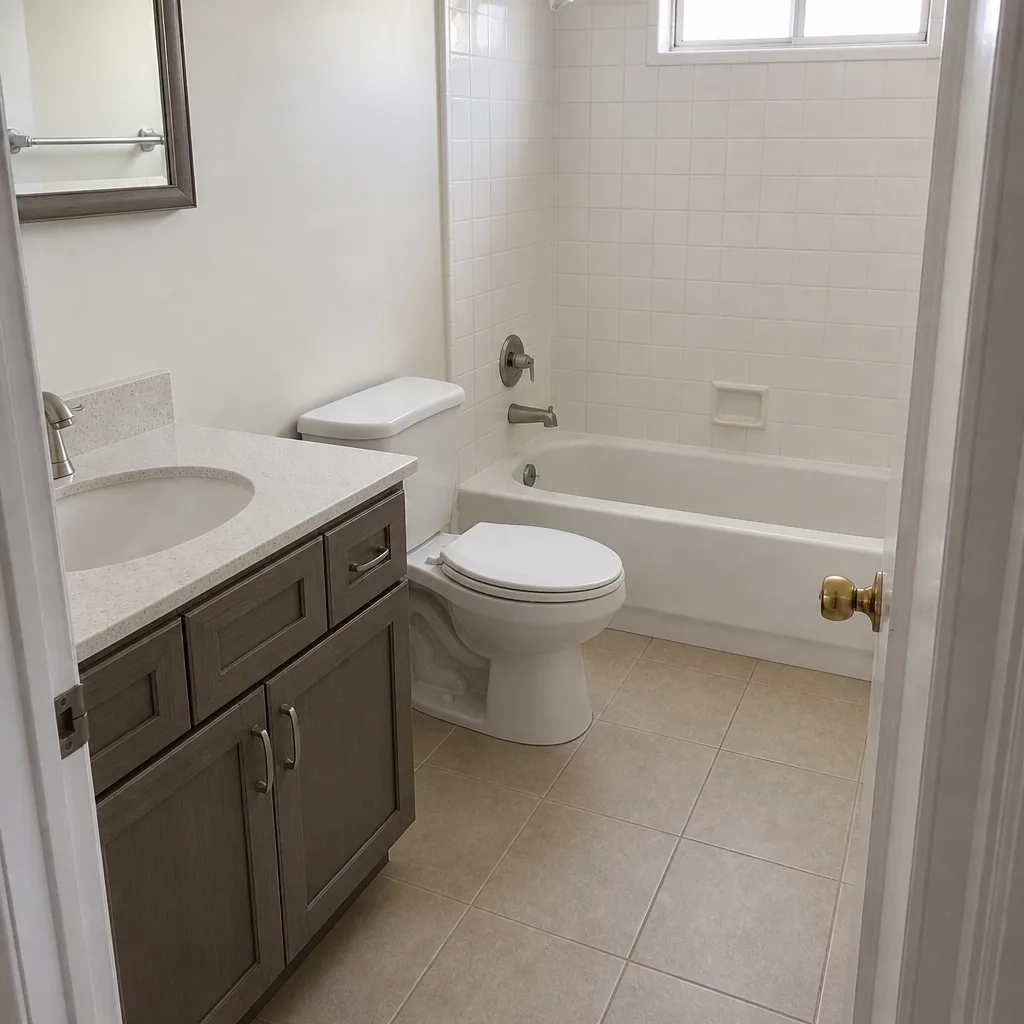
See the difference
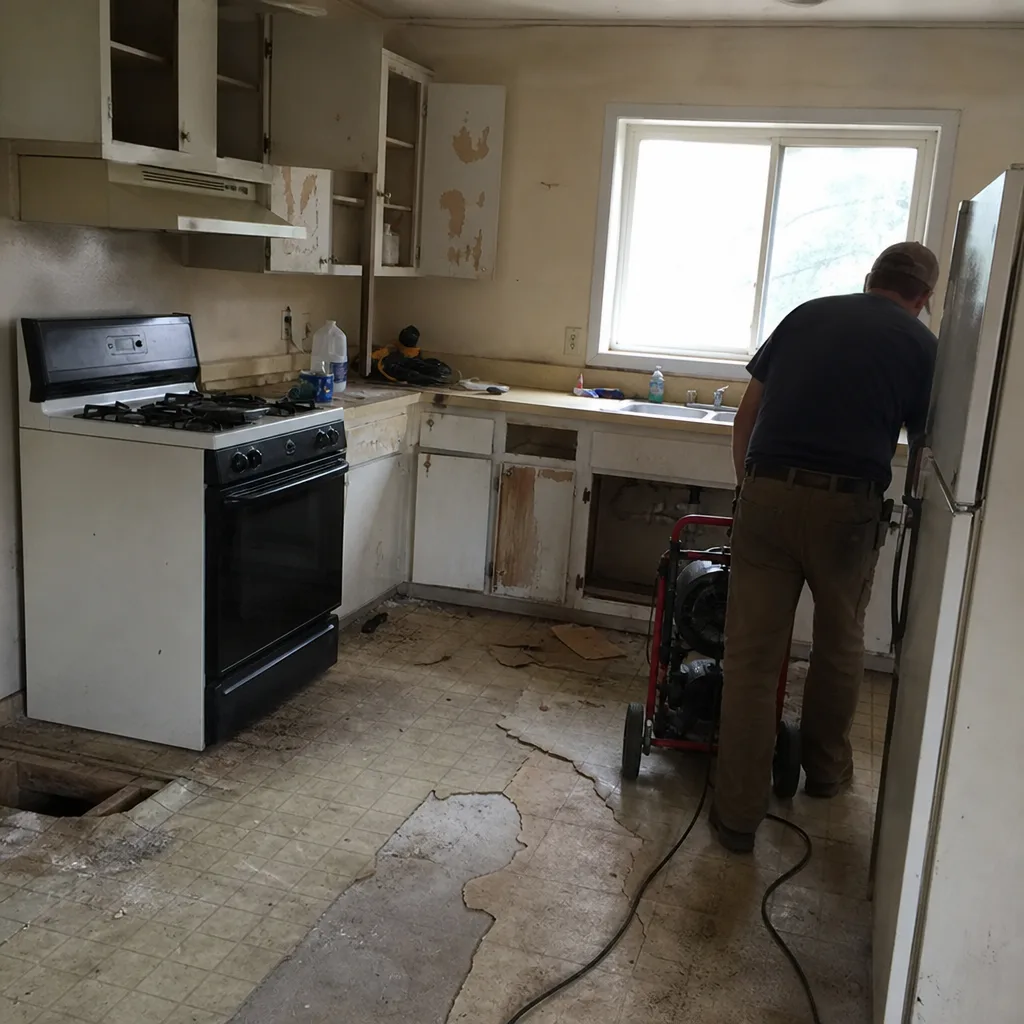 Before
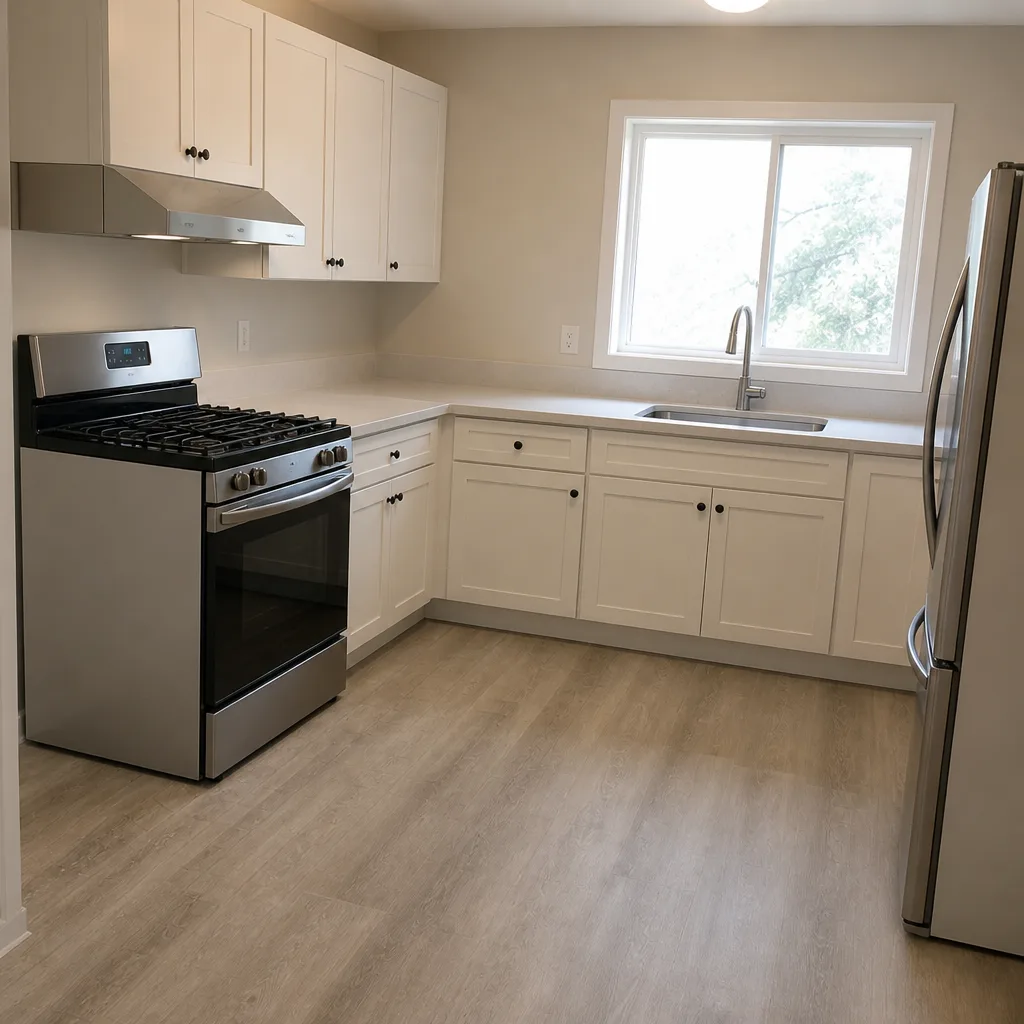 After
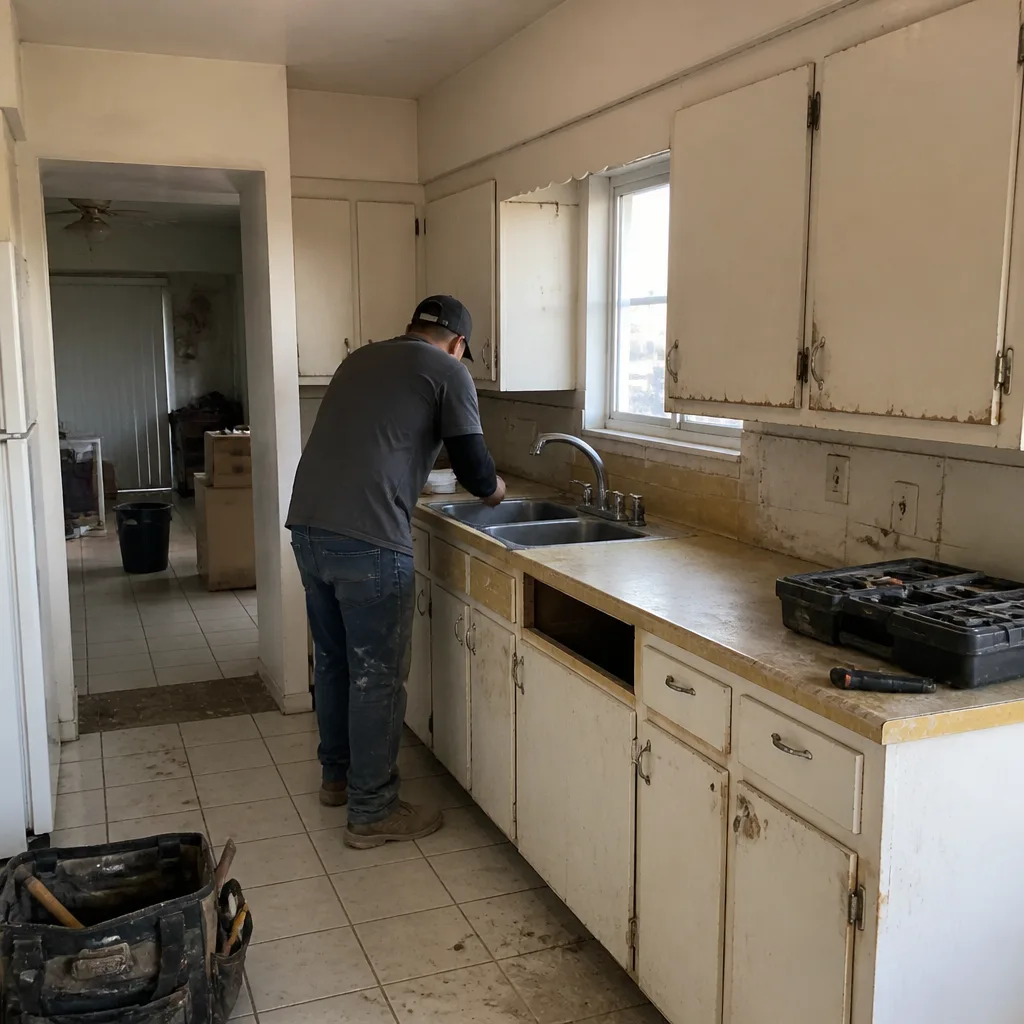 Before
 After
 Before
 After
When to Call a Professional
Some problems clearly need a licensed contractor. Structural changes, moving plumbing, rewiring kitchen circuits, tearing out cabinets down to the framing, or correcting an out-of-level floor – all of those belong in professional hands, not on your weekend list. And any of the mid-project warning signs above should prompt a second opinion before the job gets worse. A professional can look at what’s underway and tell you honestly whether it’s on track or whether it needs fixing now. If you have a contractor you don’t trust, or a contract you’re not sure about, a second estimate is the cheapest inspection you’ll ever buy. Penhallow Remodeling Paradise offers free estimates in Paradise – call (844) 761-9837 to schedule yours. We’ll walk the kitchen with you, put the findings in writing, and give you a fixed price before any cabinet comes down.
Frequently Asked Questions

Refusing to put the price and scope in writing before work starts. A contractor who won’t commit to a written number, a written scope and a written guarantee is telling you how the whole job will go. Every legitimate project we run starts with a written price the homeowner can hold us to. If a contractor won’t do that, call (844) 761-9837 for a free estimate from us instead.
A kitchen remodel in Paradise typically runs $18,000 to $55,000 depending on layout changes, cabinet line and countertop material. The variables that move the number most are whether walls or plumbing move, the cabinet brand (KraftMaid or Wellborn, for example) and the countertop material – Cambria quartz sits at a different price than a mid-grade granite. A written estimate removes the guesswork. Call (844) 761-9837 for a free estimate and we’ll put a fixed price in writing.
Yes, if the allowances are transparent and priced against real, specific materials you can see before signing. Allowances become a problem only when they’re deliberately set low to win the bid and then billed over when you pick anything else. Ask for the specific brands and products behind each allowance so there are no surprises. Call (844) 761-9837 if you’d like a free second look at any contract before you sign it.
Bonded means the contractor holds a bond required by the Nevada State Contractors Board – a claim fund that protects homeowners if the contractor breaches the contract. Insured means the contractor carries general liability and, ideally, workers’ compensation covering their crews and subcontractors. If an uninsured subcontractor is injured in your kitchen, the claim can fall on your homeowner’s policy. Always ask for a certificate of insurance that names you. Call (844) 761-9837 and we’ll walk through the certificate with you.
Ask to see it in writing with the term, the coverage, and the return-visit terms spelled out. A 365-day guarantee should name a full year of coverage on workmanship and describe exactly what triggers a return visit. A vague “satisfaction guaranteed” doesn’t do either. The 365-Day Done Right Promise covers a full year and includes a free return visit if a repair fails, in writing, on every project. Call (844) 761-9837 to ask about a specific job.
No, and it’s a better move than absorbing a bad finish. If the crew keeps disappearing, the materials don’t match spec, or verbal change orders keep coming, stop paying and request everything in writing. A second opinion now can save the finish. Call (844) 761-9837 for a free estimate on finishing or correcting the project.
The Bottom Line
Kitchen remodeling warning signs split into two clean categories: physical issues in the existing kitchen that must be scoped and priced before demo day, and contractor problems that cost more than any of them. Water staining, grease residue and out-of-level floors are fixable – they just have to make it into the written scope. A contractor who won’t put the price, permit responsibility, material brands, payment schedule, change-order process and warranty in writing before work starts is the warning sign that actually should stop you. Verify the Nevada license. Ask for the certificate of insurance. Read the allowance language. And walk away from any crew that asks for money mid-project without a signed change order. The whole thing comes down to one discipline: everything in writing, before anyone picks up a tool. If you’d like a free written estimate from a team that puts all of that on paper in advance, call Penhallow Remodeling Paradise at (844) 761-9837. Explore our Penhallow Remodeling Paradise home page to see how we run projects from first walk-through to final cleanup – and remember, our phone line is answered by a live person 24/7, so you’ll always know who you’re talking to.
Written by the team at Penhallow Remodeling Paradise.