Last updated November 18, 2026







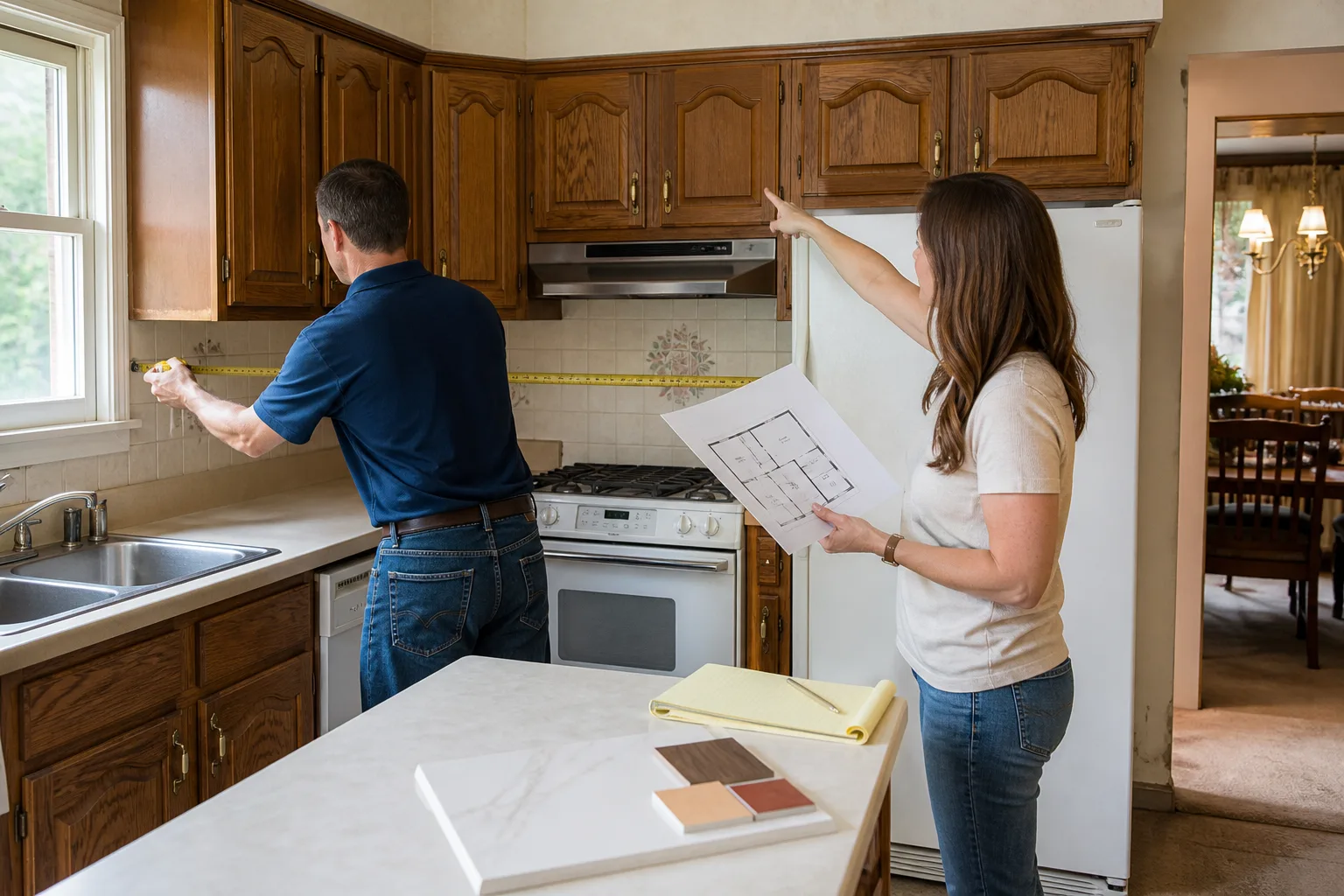
Free written scope consultation - allowances, timeline, and change-order rules on paper before a single trade is scheduled
General Contractor Maintenance Checklist for Paradise Homeowners
A cracked caulk line around a Paradise exterior window isn’t a cosmetic issue. The combination of 110°F thermal expansion and August monsoon rain can push water into a wall cavity in a single afternoon. We’ve seen it happen in homes off Tropicana and Eastern where a $40 tube of sealant was skipped in April and a $4,000 stucco repair landed by September. Most checklists you’ll find online were written for a four-season climate that doesn’t exist here. This guide is built around the failure modes Paradise homes actually have: UV degradation, monsoon intrusion, and hard-water damage. You’ll get a real working checklist, the inspection points national templates miss, and a clear line between what you can handle and what needs a licensed contractor in Nevada.
Quick Answer
If you own a home in Paradise, plan on three maintenance windows a year: a spring UV and heat check (caulk, roofing adhesive, exterior paint) in March and April, a pre-monsoon exterior inspection in June before Clark County’s storm season peaks in July and August, and a post-monsoon review in September that covers water intrusion as well as hard-water wear on plumbing fixtures and the water heater. Anything involving gas lines, electrical panels, structural cracks, or roof work above a single story belongs with a licensed contractor, not a weekend ladder.
Styles & brands we work with
- Kitchen remodeling
- Bathroom remodeling
- Home additions & ADU
- Roofing
- Windows & doors
- Driveway & pavers
- Fence
Key Takeaways
- Paradise sits in a high-UV, low-humidity, hard-water environment. The failure modes are heat, storms, and minerals, in that order.
- Caulk, roofing adhesive, and exterior paint are maintenance items here, not cosmetic ones. They degrade faster than national templates assume.
- Las Vegas Valley water runs hard enough that showerheads, supply valves, and water heater anode rods need inspection on a schedule.
- Documenting what you find before you call a contractor is the difference between a written estimate and a verbal walk-and-talk number.
- Roof work above one story, gas lines, and anything beyond a single electrical receptacle belong with a licensed professional.
Table of Contents

- The Spring UV and Heat Checklist (March – April)
- Pre-Monsoon Exterior Inspection (May – June)
- Post-Monsoon Water Intrusion Review (September)
- Hard-Water Inspection Points Unique to the Las Vegas Valley
- Water Heater Anodes and Supply Valves
- Interior Systems: Cabinetry, Counters, and Bathroom Caulk
- How to Document Findings So Your Estimate Is Accurate
- Where DIY Ends and a Licensed Contractor Begins
The Spring UV and Heat Checklist (March – April)
In Paradise, spring is your only reliable window to address UV damage before the summer bakes it in. The sun here does more damage to exterior envelopes in a decade than twenty years of weather does in a moderate climate. The three items that belong on every Paradise checklist and never appear on a national template are caulk lines, roofing adhesive, and exterior paint.
Walk the perimeter of your home and check every caulk joint on window perimeters, door frames, and where stucco meets trim. Press it with your thumb. If it’s cracked, pulled away from the surface, or feels hard instead of rubbery, it’s failed. UV exposure makes caulk brittle, and 110°F thermal expansion on a Paradise afternoon will finish the job. Replace failed joints with a paintable exterior-grade sealant rated for high-temperature exposure.
Next, look at the roof from the ground with binoculars. You’re checking for lifted shingles, exposed fasteners, and flashing that’s no longer sealed. Roofing adhesive on tile roofs degrades faster under UV than most people expect. If you see gaps or lifting, that’s a call, not a fix.
Finally, exterior paint on trim, fascia, and any painted stucco. Touch painted surfaces on the west and south faces of the home first, since that’s where UV damage is worst. Chalking, cracking, or exposed wood means the surface has lost its barrier and needs repainting before summer.
Pre-Monsoon Exterior Inspection (May – June)
Clark County’s monsoon window peaks in July and August, which means your pre-monsoon inspection needs to happen in May or June. The goal is simple: find every way water can get in and close it before the storms test it.
- Check the grading around the foundation. Soil should slope away from the home on all sides. In Paradise, our soil is often sandy and can settle or channel over a season. A low spot near a wall is a water intrusion setup.
- Inspect the window and door head flashings. Look at the top of each exterior opening. If sealant has separated at the joint between the trim and stucco, fix it now.
- Test your gutters and downspouts if you have them. Even in a desert, a single summer storm can dump more rain in an hour than your roof has seen all year. Downspouts should direct water at least a few feet away from the foundation.
- Examine patio and walkway joints. Pavers installed with Cambridge Pavers or similar brands can shift slightly over a season. If water is pooling near the house at a paver edge, re-set or re-sand the joints before the rain comes.
- Walk the base of every exterior wall. Look for staining or efflorescence (the white chalky residue) that hints at water soaking in from below.
If your home has a patio, deck, or hardscape installed with Techo-Bloc or Unilock products, check the polymeric sand or joint material. Failed joint sand sends runoff toward the walls instead of away from them.
Post-Monsoon Water Intrusion Review (September)
September is when the real diagnostic work happens. The storms have done their testing, and now you find out what failed. Walk the interior first, then the exterior.
Start with ceilings and interior walls in the rooms below the roof line: bedrooms, hallways, and closets. Look for water stains, bubbling paint, or soft drywall. Check the corners where wall meets ceiling. If you find any of that, don’t wait. Monsoon intrusion that’s caught early is a repair; caught late, it’s a remodel.
On the exterior, re-examine the same grading, flashing, and caulk joints you checked in May. Anything that opened up over the summer needs to be sealed before the cooler weather settles in.
If you have a hardscape area, look at the sand in the joints around any Oldcastle or Cambridge Pavers installation. Heavy rain can wash out joint material. In the Las Vegas Valley, sand-loss combined with hard water creates a crust that can damage the surface over multiple seasons.
If you find intrusion, this is the point to call someone with the right scope of work. A drywall repair is on the small end of what we do. A wall cavity that’s been wet for more than a few days is more involved. You can review the whole-home remodeling scope and process at our Penhallow Remodeling Paradise home page. If the intrusion is concentrated in a bathroom, bathroom remodeling in Paradise is the right starting point, since wet framing behind a shower is almost always a full-bath scope.
Hard-Water Inspection Points Unique to the Las Vegas Valley
Paradise sits on Valley water that runs hard. The minerals that make the water taste like it does also build up on every surface they touch. The national maintenance template ignores this entirely, and it’s one of the most common reasons a Paradise home needs a plumbing or fixture replacement before its time.
The four inspection points worth checking on a schedule:
- Showerheads. Pull the showerhead and look at the inlet screen. If it’s white and crusted, mineral scale is restricting flow. A quick soak in white vinegar can recover most of it. A showerhead that’s been scaled for years will fail, and internal corrosion can pit the fixture over multiple seasons.
- Supply valves under sinks and behind toilets. Close and reopen each one every few months. Hard water builds calcium around the valve stem; if it sits untouched for years, it can seize or weep when you finally need to shut it off for a repair.
- Faucet aerators. Pull each aerator and check for scale. A clogged aerator is more than a slow flow: it can indicate scale building up inside the valve cartridge, which is where Kohler and Moen fixtures tend to fail.
- Water heater hard-water impact. Hard water accelerates sediment accumulation at the bottom of a tank. It also eats anode rods faster. See the next section.
If you’re seeing scale at multiple points throughout the house, a whole-home filtration or softening system is worth a conversation. That’s plumbing trade work, not general contracting. Ask about it directly when you call us, and we’ll tell you whether it’s in our scope or point you to who handles it.
Water Heater Anodes and Supply Valves
The anode rod is the sacrificial metal inside your water heater tank. It corrodes so the tank doesn’t. In a hard-water climate like Paradise, an anode rod can be consumed noticeably faster than in soft-water areas. Checking it annually is a five-minute task; skipping it for years is a tank replacement.
- Look at the water heater age tag first. Most tanks have a manufactured date on the label. If the tank is past its typical useful life, the anode rod is likely already gone.
- Shut off the water and power (gas or electric) before touching anything. A qualified professional should handle this if you’re not comfortable with the shutoffs.
- Locate the anode rod port at the top of the tank. On most tanks it’s a single hex head at the top center. If you can’t find it or can’t access it, don’t force it.
- Inspect for corrosion if you can safely remove the rod. If more than half the rod is consumed, it needs replacing.
- Flush sediment annually. Hard water sediment settles at the bottom of the tank and reduces efficiency. A drain and flush at the bottom valve keeps it under control.
If any of this feels like it’s outside your comfort zone, it is. Water heater work involves pressurized hot water and gas or high-voltage electricity. Call a licensed professional. We don’t want to see a Paradise homeowner burned by a tank that should have had its anode replaced two years ago.
Interior Systems: Cabinetry, Counters, and Bathroom Caulk
Paradise homes have interior maintenance needs that stack on top of the climate. The two interior areas that cross into remodeling territory fastest are bathroom caulk failure and cabinet hinge wear.
Bathroom caulk where the tub meets the wall is a genuine point of failure. Our humidity is low, which means the caulk looks fine for longer than it is, and the early sign of a failed joint is a hairline crack you can see at the edges where tile meets the tub or shower pan. If it’s cracked, water gets behind the tile and into the drywall or cement board substrate (the moisture-resistant layer behind your tile). That is the beginning of a bathroom remodel. Re-caulking is a maintenance task. Re-tiling is not.
Cabinet door hinges and drawer glides degrade slowly in a dry climate. If doors on a kitchen run of KraftMaid or Wellborn cabinetry are sagging or rubbing, hinges may just need tightening. If they’re stripped, or the cabinet frame is separating, that’s the point to get someone out to look before the wear spreads. Kitchen cabinet and counter work is core to kitchen remodeling in Paradise, and it’s often a smaller scope than homeowners expect.
Countertop materials need different care. Cambria and Caesarstone quartz are non-porous and highly UV-stable, but seams can open slightly over time in a very dry climate. Silestone and natural stone have their own care needs. If a counter seam has opened, don’t try to fix it with a general-purpose sealant. Ask a professional.
How to Document Findings So Your Estimate Is Accurate
This is the most overlooked part of the whole checklist, and it’s the one that saves you money. When you call a contractor, the quality of your description directly determines the quality of the estimate you get. A vague phone call gets you a verbal range. A documented call gets you a written number.
Here’s how to document a maintenance issue before you call:
- Photograph the issue in place. Wide shot first (shows where it is on the house), then a close-up (shows what it is).
- Note the exact location. “North-facing wall in the bedroom below the hall bath” beats “the bedroom.”
- Note when you first noticed it and what changed. “Noticed after the August storm” tells a contractor something. “Noticed sometime this year” doesn’t.
- Note any tests you’ve run. If you tested the caulk and it cracked, if you closed a supply valve and it wept, if you removed the showerhead screen and it was crusted, say so.
- Note anything you’re not sure about. “I don’t know if this is water damage or paint bubbling” is a useful statement. It lets a contractor plan for both.
When you bring that to a contractor like the one we work with on general contractor work in Paradise, you can get a written price instead of a verbal ballpark. That is the reason our written price-before-work policy exists: the number you see on the estimate is the number on the invoice, and the documentation is what makes that possible.
Where DIY Ends and a Licensed Contractor Begins
Nevada law draws lines around certain trades. You can caulk a window. You can’t touch a gas line or work on your electrical panel. Here’s how the split looks for a Paradise homeowner going down this checklist.
Reasonably safe to handle yourself: caulking window and door frames, replacing a showerhead, cleaning a faucet aerator, testing supply valves, taking photographs, checking grading and clearing debris, testing a smoke alarm.
Call a licensed contractor: roofing repairs above one story or on any steep pitch, roof adhesive reapplication, electrical panel work, gas line work, water heater anode rod replacement if you’re not confident, structural crack repair, wall cavity repairs, any stucco repair that requires a scaffold or ladder above a single story.
Nevada’s contractor licensing rules mean the people doing roof work, electrical, plumbing, or structural repairs must hold the appropriate license. Getting a free written estimate from a licensed and insured contractor is the standard for any of these jobs, and it protects you from the same problem twice.
See the difference
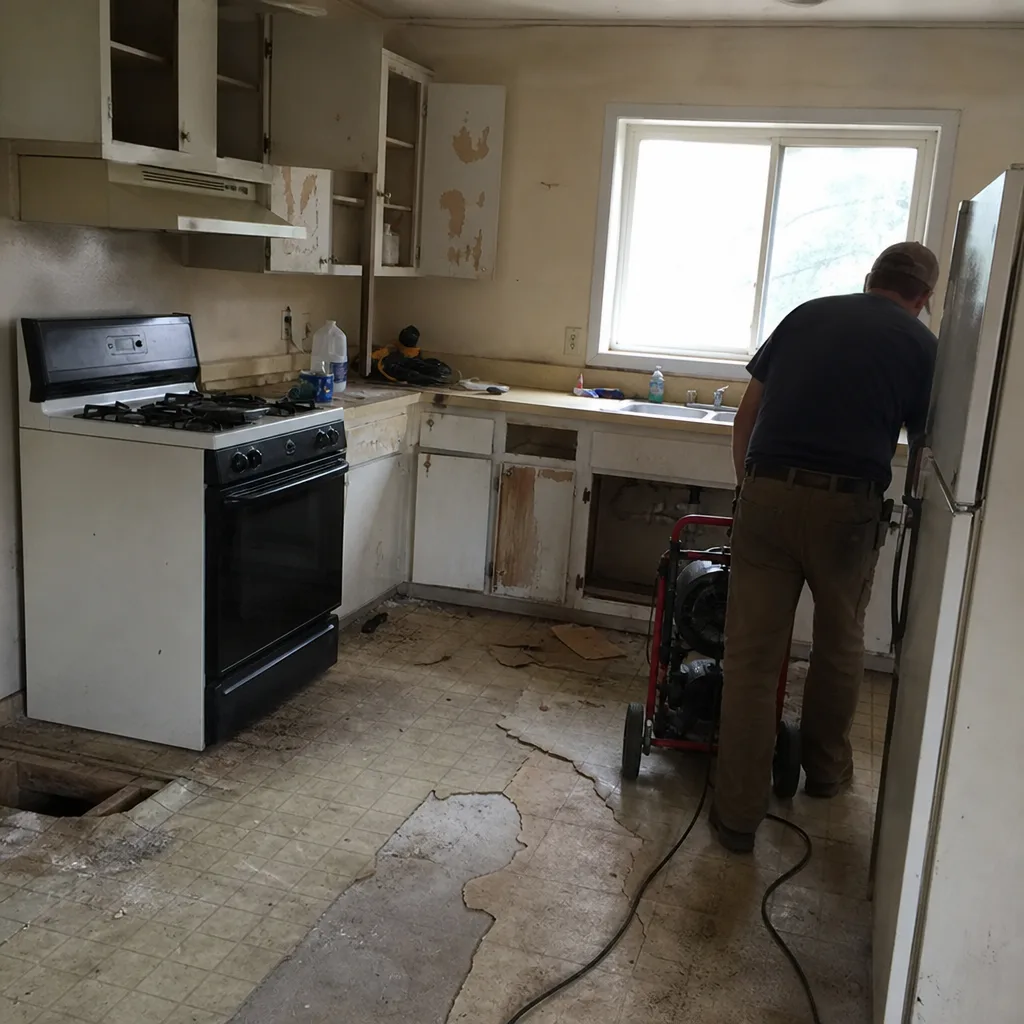 Before
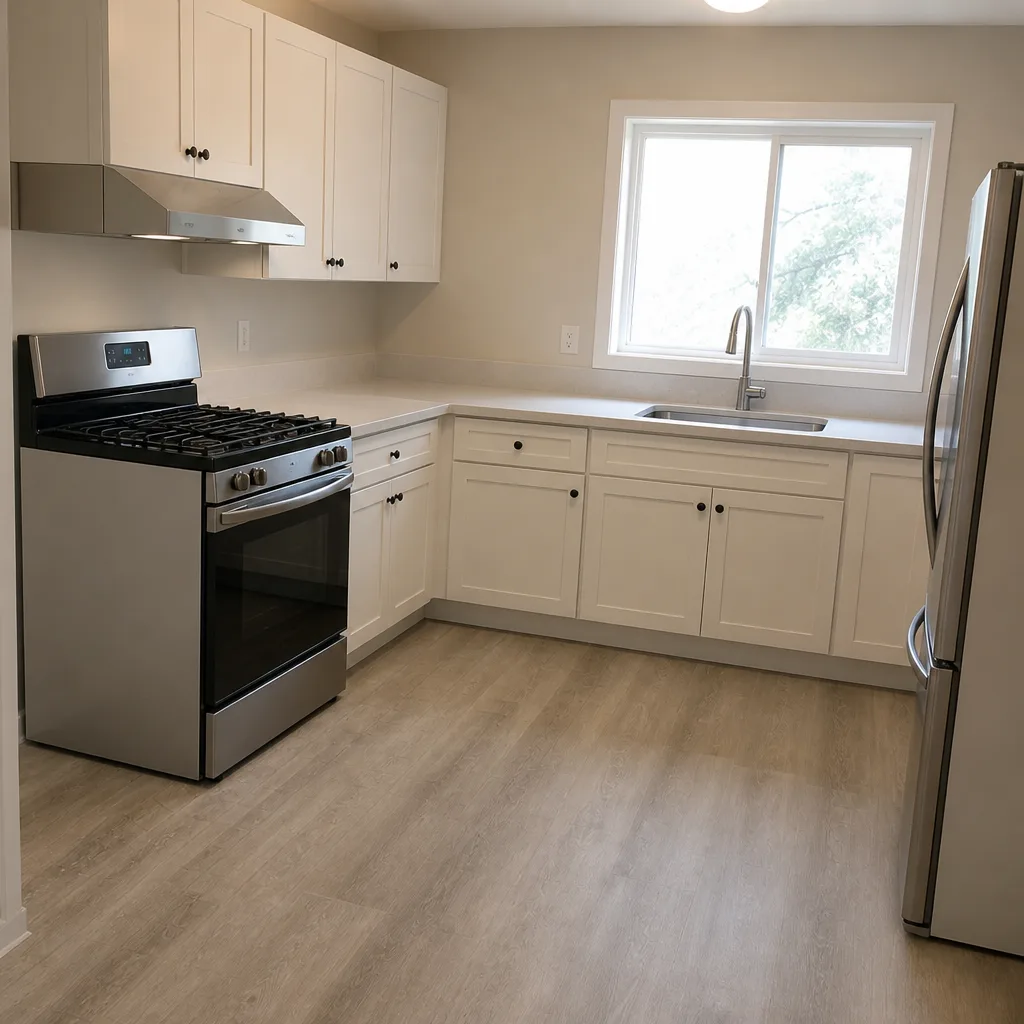 After
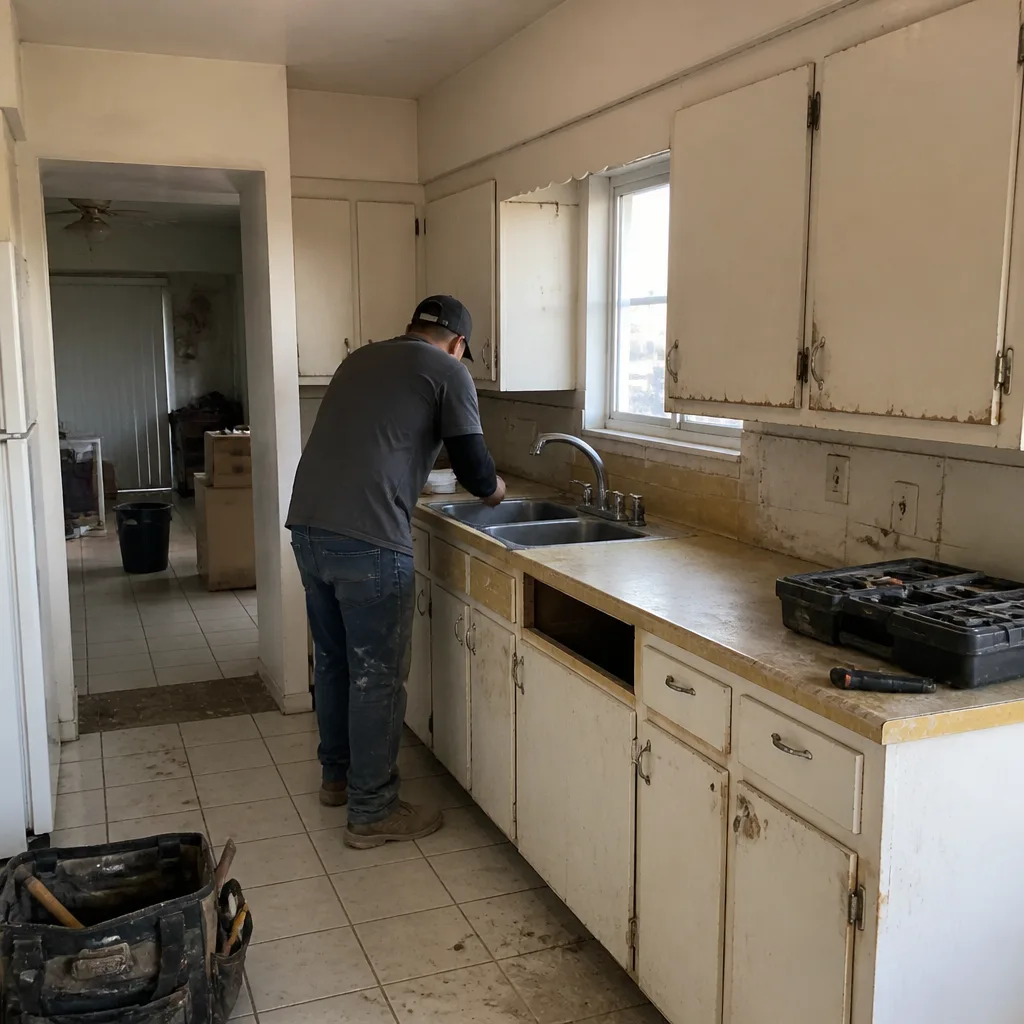 Before
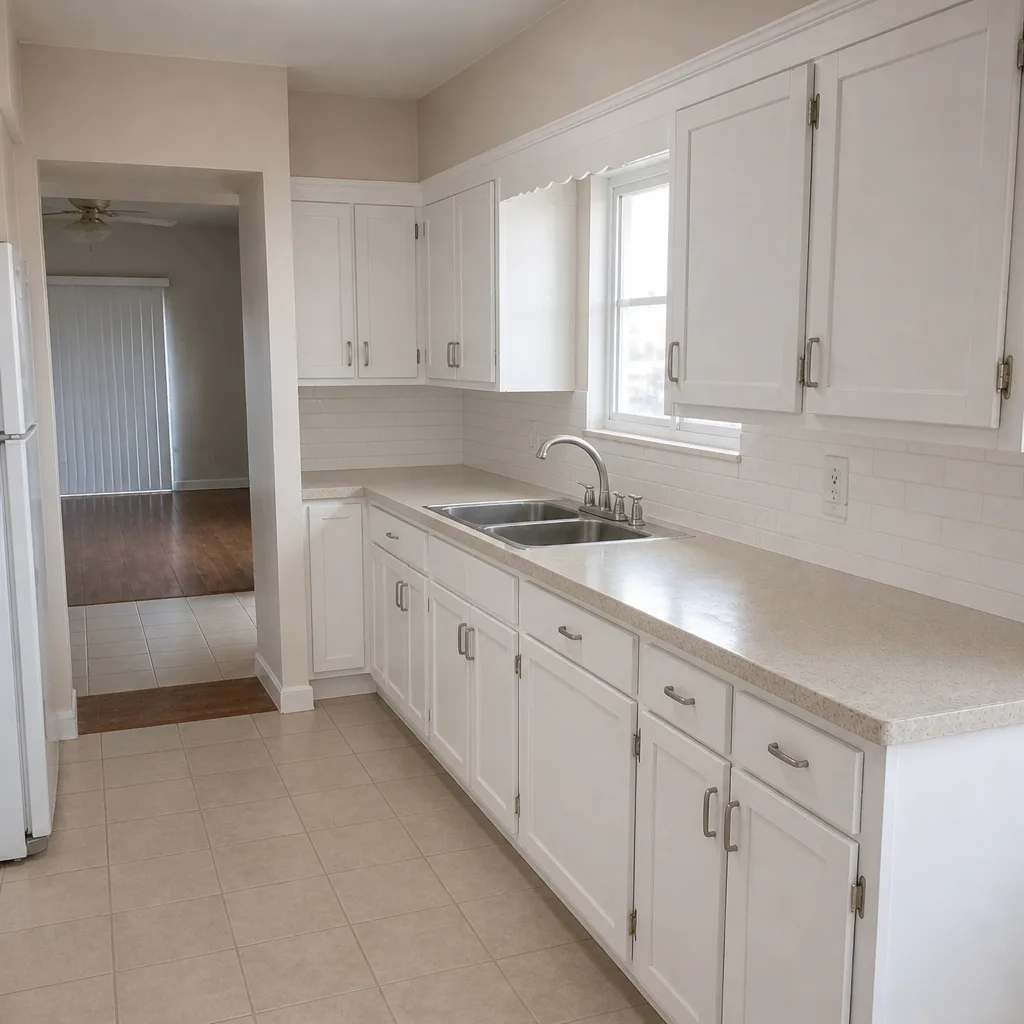 After
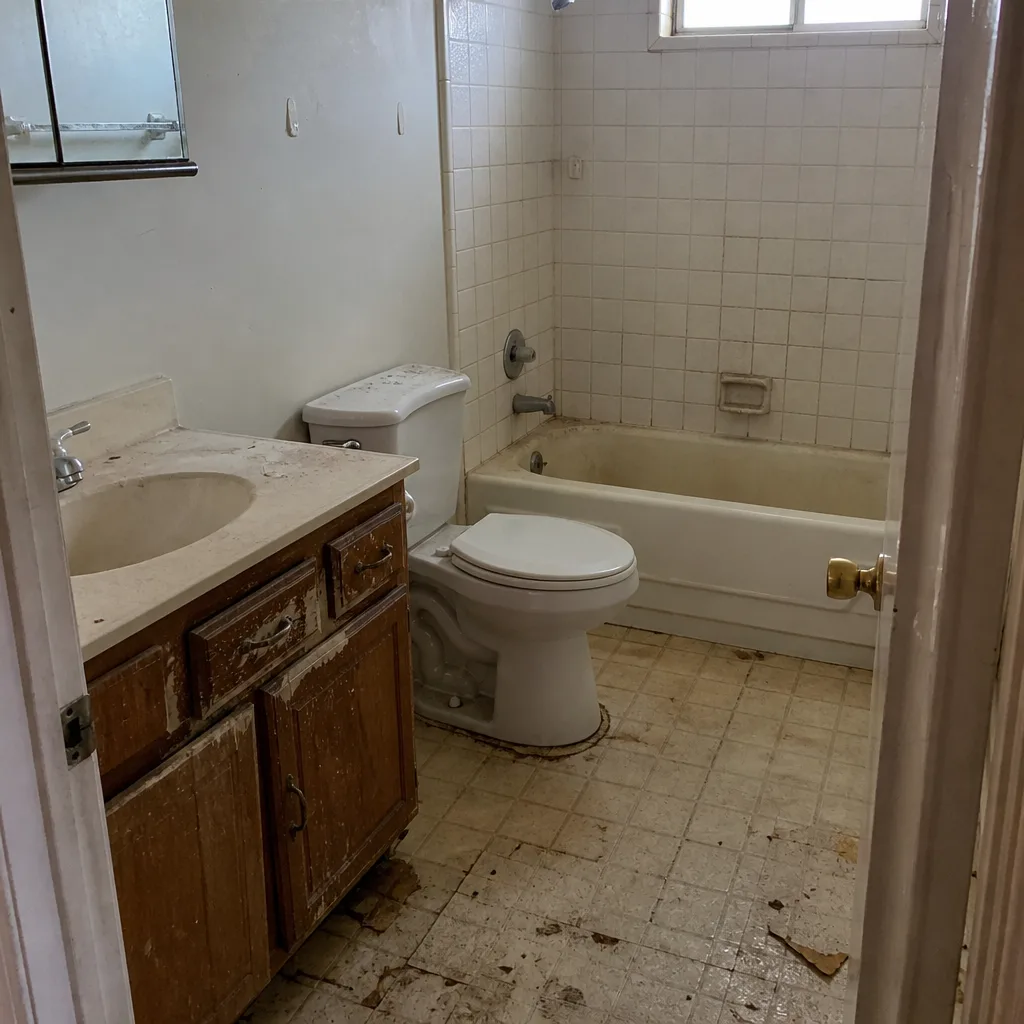 Before
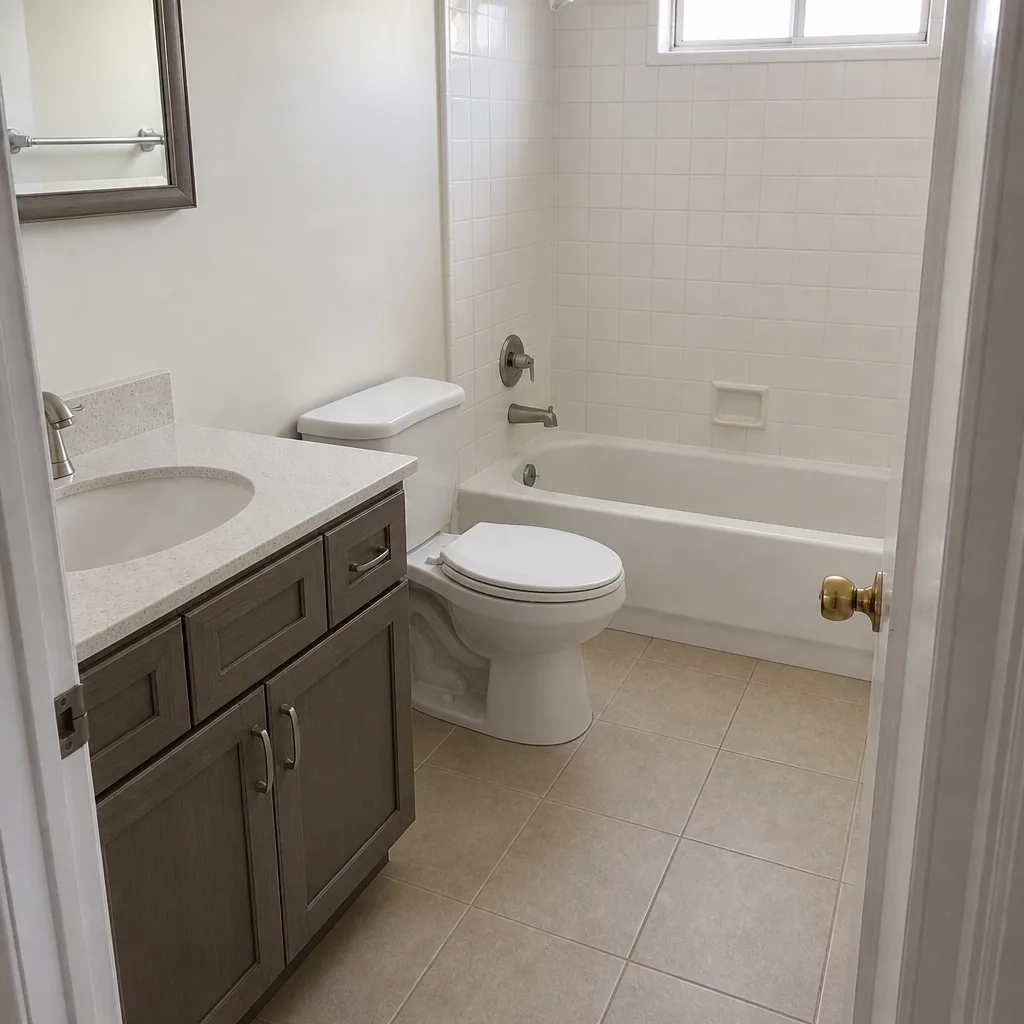 After
Common Mistakes to Avoid
- Skipping the spring UV check because “the house looks fine.” Caulk failure and paint failure happen before they’re visible from the street. The point of the March walk is to find them at the six-month stage, not the six-year stage.
- Treating monsoon season as a non-issue. A single August storm can dump more water in one afternoon than the rest of the year combined. The pre-monsoon check is the highest-value hour you’ll spend on the home.
- Ignoring the water heater until it fails. In Paradise, hard water shortens anode rod life. Skipping the annual check is the most common reason a water heater fails well before its rated life.
- Blaming a slow showerhead on a bad fixture. It’s almost always mineral scale. Buy a $10 strainer, soak the head in vinegar, and see if flow returns before you call a plumber.
- Re-caulking a bathroom that already has a wet substrate. If the caulk joint is cracked and the grout around it shows soft spots, you’re re-caulking a problem, not fixing it. Bring in someone to look at the substrate.
- Calling a contractor before you have your photographs ready. The verbal walk-and-talk estimate is the classic setup for a price change after demo. Bring documentation. Require a written price before any work starts.
- Welcoming a van without checking that the technician is background-checked. You’re about to open the most private parts of your home to a stranger. On any professional visit, ask whether the crew is background-checked and uniformed.
When to Call a Professional

Most of the checklist is stuff a careful homeowner can handle. A handful of items are not, and we want to name them plainly. Call a professional if you find water intrusion anywhere inside a wall, if a caulk joint failure has already moved into stucco, if a structural crack has appeared (a hairline is a paint job; a horizontal crack in a foundation wall is a call), if the electrical panel is hot to the touch, if a gas line smells even faintly sweet, or if any roof work requires a ladder above a single story on a steep pitch. These are safety items, and the right response is a licensed contractor rather than a weekend project.
Penhallow Remodeling Paradise offers free estimates in Paradise – call (844) 761-9837. Every estimate is a written number before any work starts, technicians are background-checked and uniformed, and a real person answers the phone at any hour. If the work fails within the 365-day window, we return and fix it at no charge, and that promise is in writing on every project.
Frequently Asked Questions
Three times a year: a spring UV and heat check in March or April, a pre-monsoon exterior inspection in May or June, and a post-monsoon review in September after Clark County’s storm season. Adding a short monthly walk of the interior (checking under sinks and around ceilings) catches slow leaks before they become remodels. Call (844) 761-9837 for a free estimate if anything turns up that’s outside your comfort zone.
Failing exterior caulk on window and door frames. The combination of high UV and 110°F thermal expansion breaks down standard exterior sealant faster here than almost anywhere, and the early signs are easy to miss because they don’t look bad from the street. Walk the perimeter and press each joint with your thumb. Anything that’s cracked, pulled away, or hard instead of rubbery needs replacing before summer. If you’re not sure whether it’s a small sealant fix or a wall cavity issue, call (844) 761-9837 – estimates are free.
Yes, and specifically in July and August. Clark County’s monsoon season can bring an afternoon storm that dumps months’ worth of rain in a few hours. Your pre-monsoon checklist (grading, head flashings, paver joints, gutter drainage) is what protects you from the difference between a wet patio and a wet wall cavity. If you find intrusion after a storm, don’t wait to call.
Look for white crusting on screens, aerators, and valve stems, and check whether the flow rate has dropped from a fixture. Hard water builds scale on the inside of fixtures. Pull the showerhead screen and check. Test the under-sink supply valves by closing and reopening them. If they weep when you close them, they’ve been compromised by mineral buildup. Call (844) 761-9837 if multiple points are affected and you’d like a written estimate on what it would take to replace fittings throughout the home.
It’s technically possible on many tank models, but you’re shutting off pressurized hot water and gas or high-voltage electricity to do it. We don’t recommend it for a homeowner unless you’ve done it before on the same model. The annual check and flush is worth scheduling with a professional. Call (844) 761-9837 – estimates are free.
Not with us. Every project gets a written price before any work starts, and the number on day one is the number on the invoice. If your documentation is accurate (photos, locations, timing), the estimate you receive will be the estimate you pay.
Yes. The local licensed professional we connect you with pulls the required permits for structural, electrical, and plumbing work, and passes the inspections. That’s part of the written scope. Call (844) 761-9837 for a free estimate and a written scope that lists the permits.
It depends on scope: a caulk and sealant response is a one-day job; a wall cavity repair or bathroom substrate fix is a two-week to several-week scope, and a whole-home remodel is a longer commitment. What stays fixed is the arrival window we give you and the price we wrote down. Call (844) 761-9837 for a free estimate and a realistic schedule.
The Bottom Line
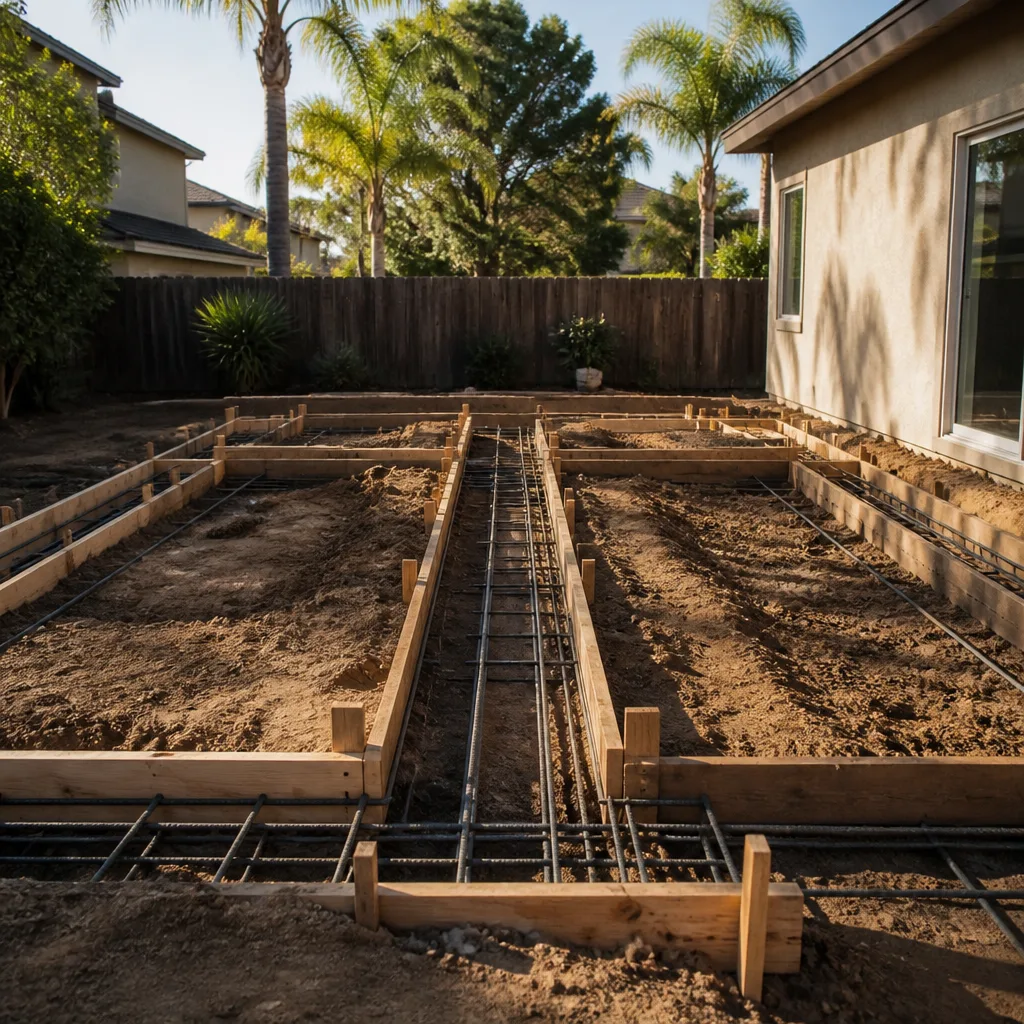
A Paradise home has a maintenance rhythm that national checklists don’t describe. Fix the things that fail from UV and heat in spring, close the water intrusion paths before the July and August monsoon, and check the hard-water wear on your plumbing through the year. The point of the whole checklist is to keep small fixes small: a $40 tube of caulk in April is a real difference from a stucco and wall cavity repair in September. Document what you find with photos and locations, call the people who hold the license for anything you’re not sure about, and get a written price before anyone starts work. That is how a Paradise homeowner stays ahead of the house instead of behind it.
If any of this has turned up something you’d rather not tackle alone, our team is ready. Licensed and insured work, background-checked and uniformed technicians, and a 365-day guarantee backed in writing. Penhallow Remodeling Paradise home is where to start, or call (844) 761-9837 to schedule a free estimate.
Written by the team at Penhallow Remodeling Paradise.